Validation case
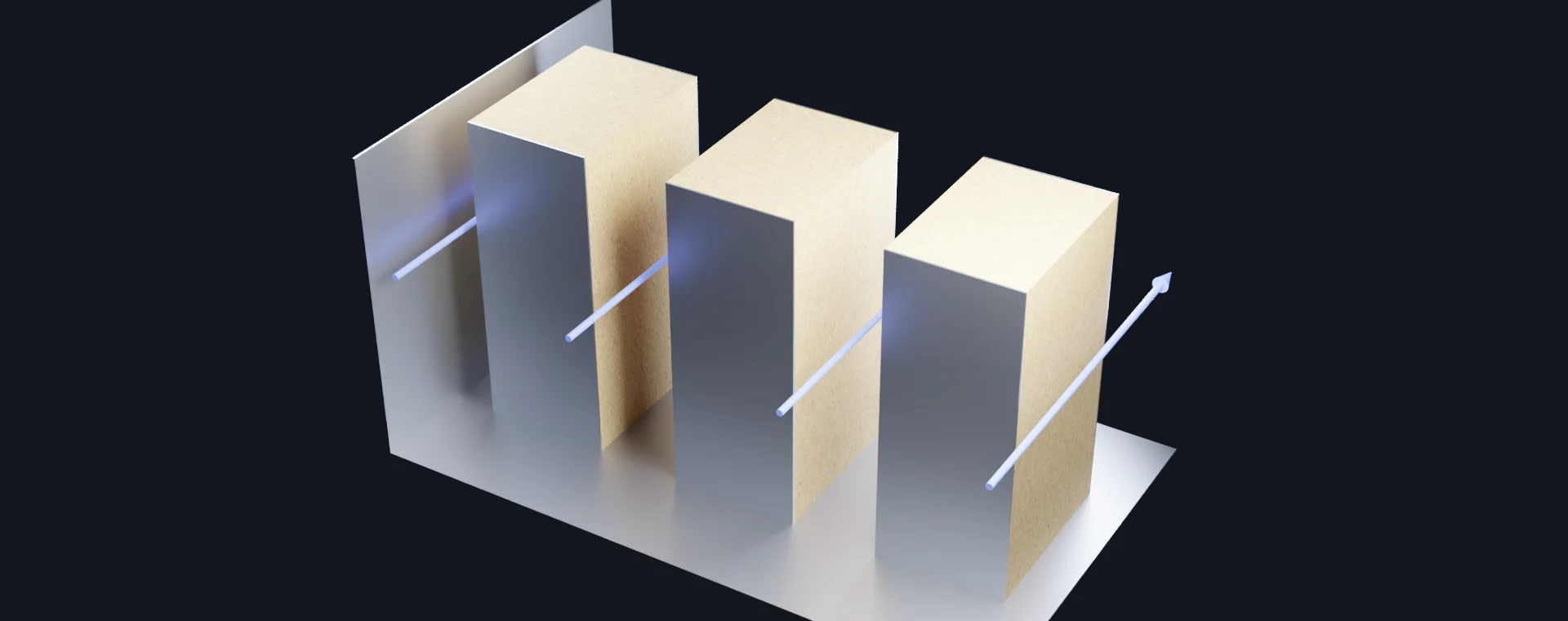
Parallel-baffle (splitter) silencer
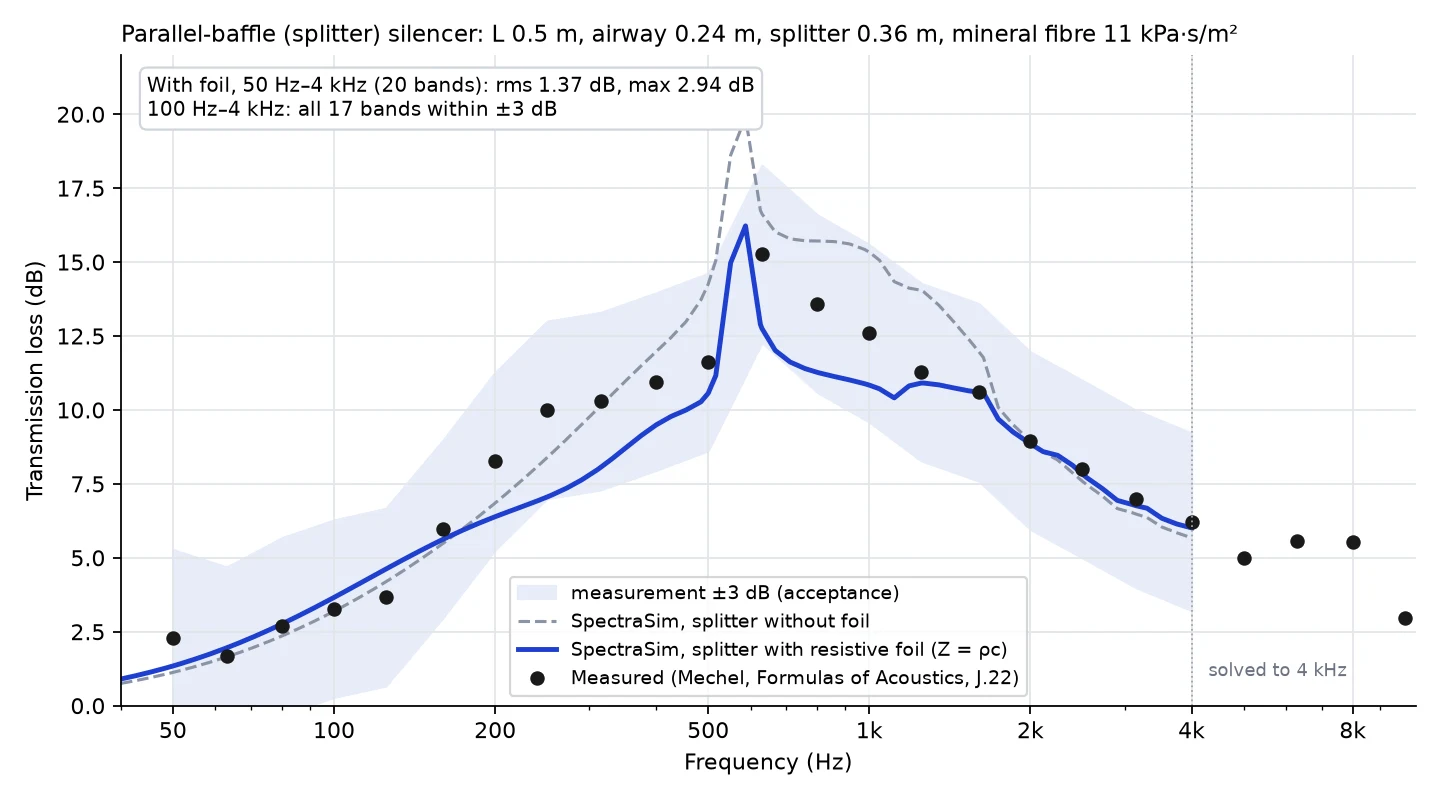
Against measured transmission loss (Mechel, Formulas of Acoustics, J.22), for the parallel-baffle (splitter) silencer, mineral fibre with a porous foil cover, 50–4000 Hz, SpectraSim gives: rms 1.37 dB, largest 2.94 dB; all bands from 100 Hz to 4 kHz within ±3 dB; the 630 Hz peak reproduced.
1.37 dB TL rms difference, 50 Hz to 4 kHz
Results
How close is SpectraSim?
Rms 1.37 dB, largest 2.94 dB; all bands from 100 Hz to 4 kHz within ±3 dB; the 630 Hz peak reproduced.
Model and set-up
- Reference
- Measured transmission loss (Mechel, Formulas of Acoustics, 2008, J.22)
- Silencer length 0.5 m, airway 0.24 m, splitter 0.36 m; mineral fibre 11 kPa·s/m², hard splitter heads.
- Porous foil cover as a purely resistive screen of one ρc; its mass is neglected, which matters only below about 300 Hz.
- One periodic cell (half a splitter and half an airway) with rigid symmetry walls, plane-wave incidence, 91 frequencies from 40 Hz to 4 kHz.
How to read the result
- Every 1/3-octave band from 100 Hz to 4 kHz is within the ±3 dB acceptance criterion.
- The 630 Hz peak is reproduced: it sits at the first cross-mode cut-on of the 0.6 m splitter period.
- Without the foil the rms is about the same, but the TL is 2–3 dB too high from 500 Hz to 1.25 kHz: the foil is needed to match the measurement.
Selected cases
Other validation cases
-
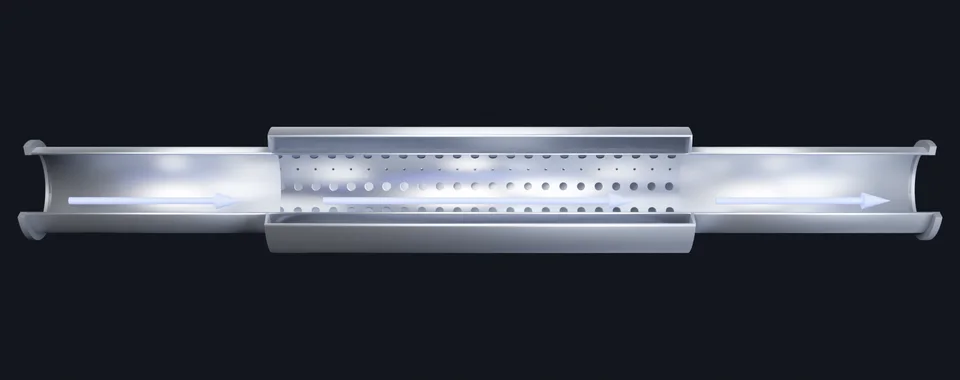 Measured Concentric-tube resonators ≈ 2 dB peak levels against measured
-
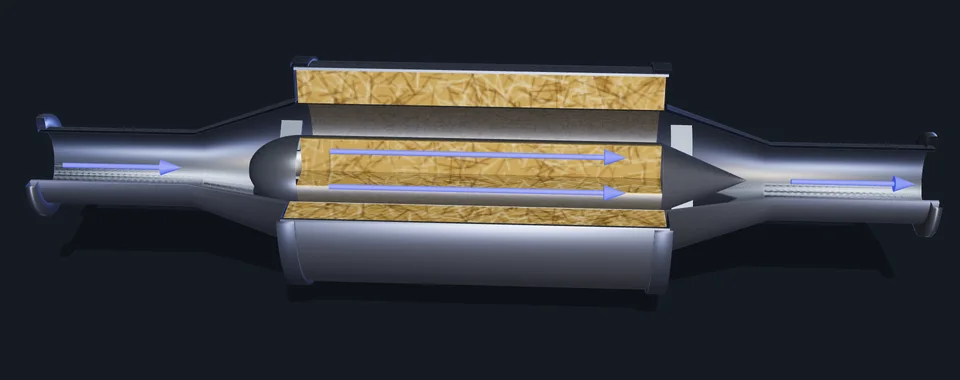 Analytical Pod silencer with absorbing pod and lining 1.3 dB TL rms difference below the 1.7 kHz cut-on
-
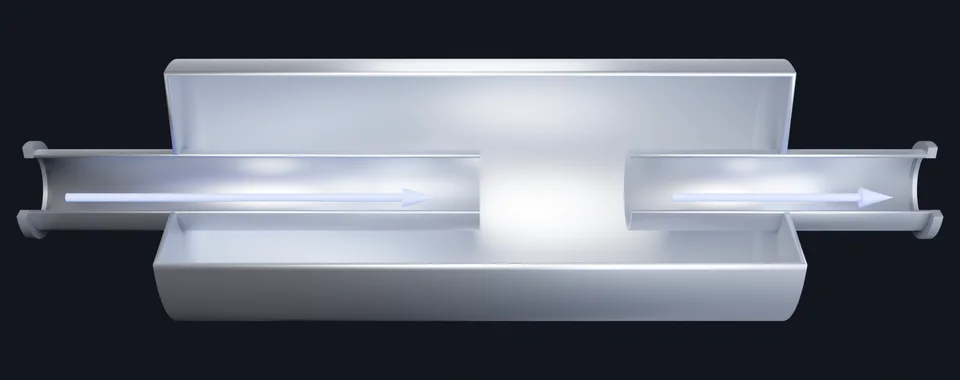 Code-to-code Muffler with an extended-tube chamber 0.12 dB TL rms difference, 20 Hz to 1 kHz
-
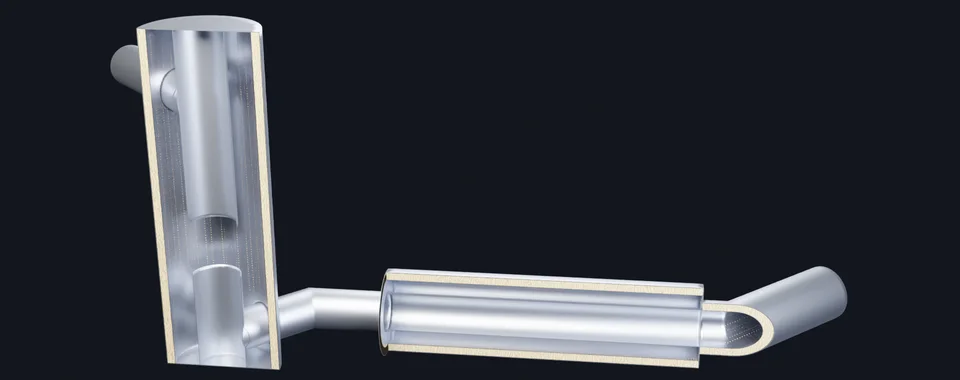 Code-to-code Exhaust muffler with three absorbing packings 0.16 dB TL rms difference, 20 to 500 Hz
-
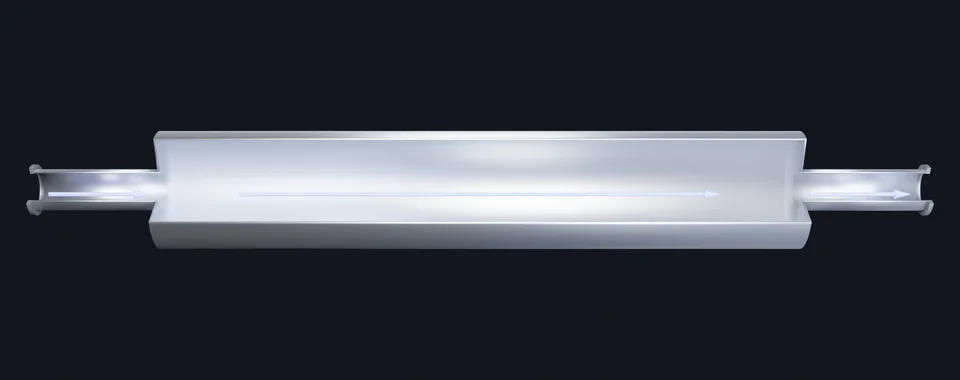 Analytical Expansion chamber against the exact 1-D solution 0.36 dB below 0.4 of the first cross-mode cut-on
Check it on your own muffler.
Download SpectraSim and run your geometry, or let our engineers run the study and compare it with your test.